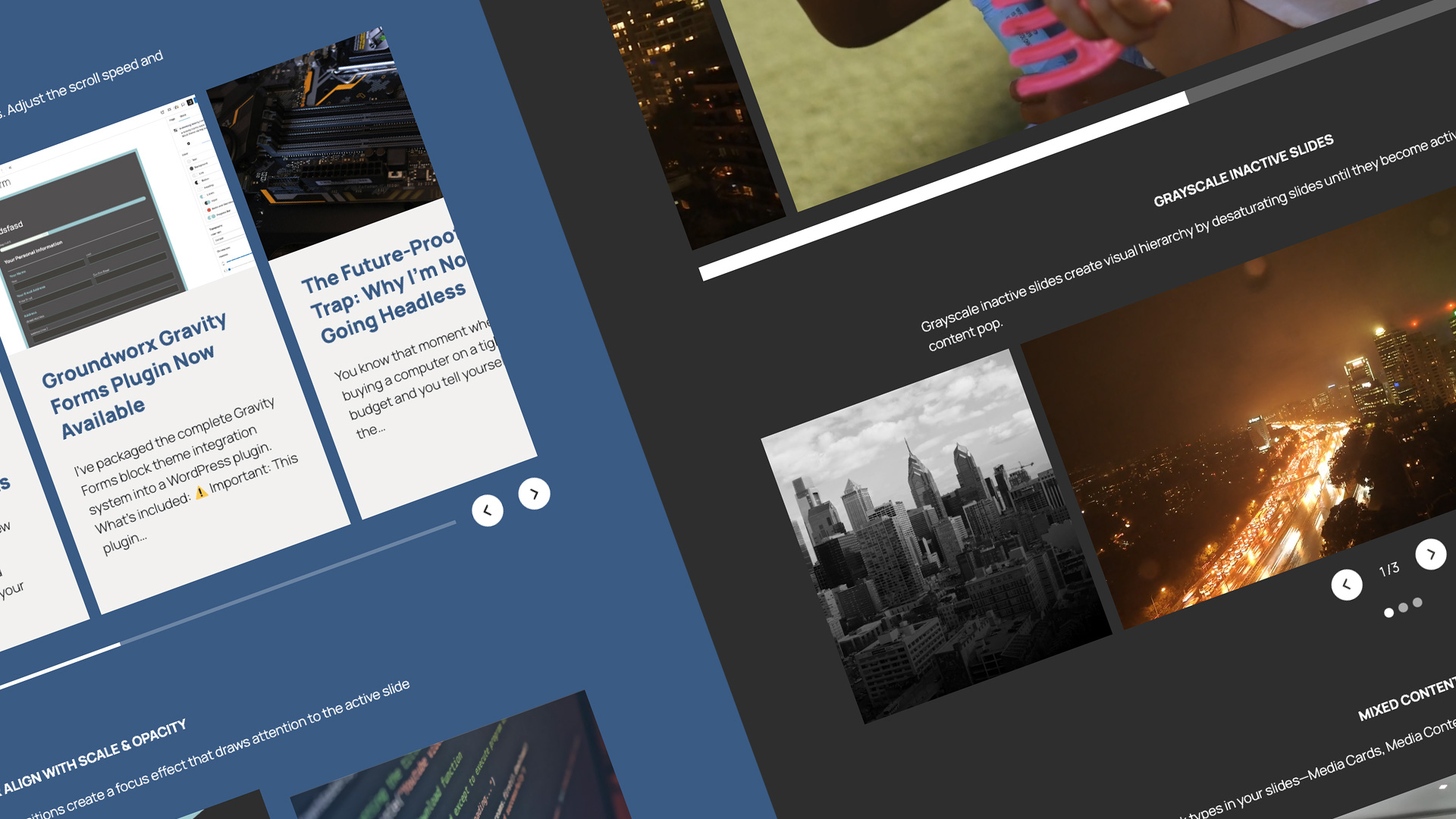
The 2.2 release cycle brings the biggest upgrade to Groundworx Showcase carousels since the Interactivity API migration: a brand-new playback block, modern input gestures, layout flexibility, and a broad accessibility pass.
Flow Playback (new in 2.2.0, polished in 2.2.1). A new block that adds animated progress dots with play, pause, and replay controls. Inactive dots are small circles; the active dot expands into a pill and fills from left to right over the duration of each slide, giving viewers a clear visual cue for how much time is left before the carousel advances. A single button next to the dots swaps between three icon states — play, pause, and replay — based on where the slideshow is in its cycle. 2.2.1 adds styling controls (color, padding, border, spacing) and vertical alignment, so the playback bar fits any design system.
Wheel Gestures. Navigate slides with trackpad or mouse wheel, with optional elastic bounce at the start and end of the track.
Overflow Visible. Per-breakpoint toggle to render slides outside the viewport for editorial and magazine layouts.
Accessibility improvements across the carousel family. Every pagination control in the plugin — Flow Playback, Flow Pagination Numbers, and Flow Pagination Shapes — now implements the W3C ARIA Authoring Practices Guide tabs pattern: stable tab IDs, aria-controls pointing to slide panels, and aria-labelledby on slide panels pointing back to their tab. Keyboard navigation follows the standard tabs pattern, with arrow keys cycling through dots and Home and End jumping to the first and last. Out-of-view slides are hidden with the inert attribute, which resolves common false positives from automated accessibility checkers related to focusable descendants inside aria-hidden subtrees. Play, pause, and replay labels are translatable through the shared label context.
If you’re already using Static Flow, Dynamic Flow, or Gallery Flow, the accessibility improvements apply automatically — everything flows through a shared gwx_flow_apply_directives() helper, so no content migration is needed.