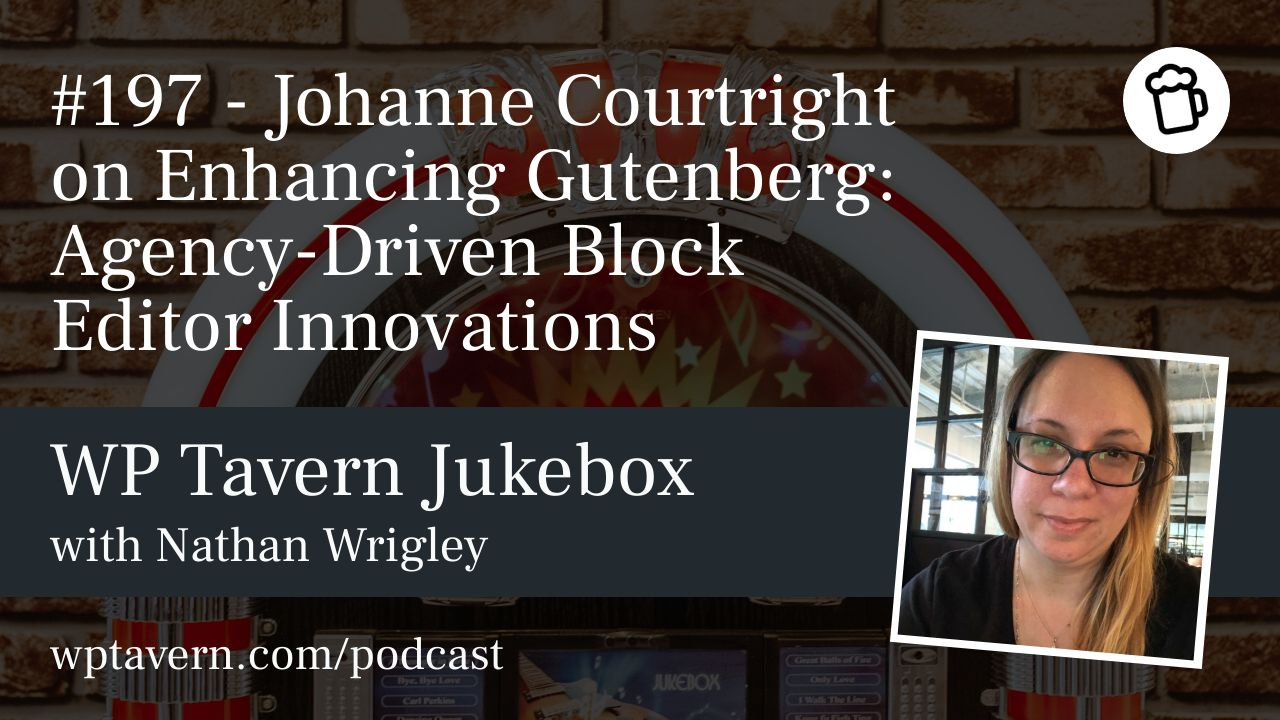
Back in December, Nathan Wrigley had me on the WP Tavern Jukebox podcast. We talked for about 45 minutes about Groundworx, the block editor, and the slightly strange experience of trying to build an agency-grade toolkit on top of Gutenberg in 2025.
You can listen to the full episode here: #197 – Johanne Courtright on Enhancing Gutenberg: Agency-Driven Block Editor Innovations.
If you’re short on time, here’s what we got into.
How I got here
I started with WordPress in 2011, at a marketing agency, coming out of Dreamweaver and static HTML. I’m self-taught, learned on the job, and my whole career has been about pushing WordPress as far as it will go, custom queries, custom post types, API integrations, anything a client needed that wasn’t in the box.
When Gutenberg arrived, I jumped in early. Took a React course, struggled, kept going. At my last agency we built a small core set of blocks together, but we were still mixing ACF in for the parts Gutenberg couldn’t handle yet. When I decided to start something of my own, I went all in: 100% Gutenberg, Interactivity API, no jQuery. Not because it was easier, but because I believed the platform was finally ready and I knew how to solve the things that were missing.
What’s actually missing from Core
Nathan asked me what I felt was lacking in the block editor, and my answer came down to one word: agencies. WordPress out of the box is good enough for someone starting out. It’s not good enough for an agency that has to hit pixel-perfect designs, support multiple breakpoints, and give clients a consistent color system across a whole brand.
So Groundworx fills those gaps. Better breakpoint controls, color palette presets that cascade properly, responsive layout switching, a navigation system that handles modals and slide-ins and accordions from a single HTML structure. Things I kept rebuilding on every client project, packaged so I don’t have to rebuild them again, and so other developers don’t either.
Why I’m not fighting WordPress
One thing I wanted to be clear about on the show: Groundworx isn’t trying to replace Core blocks or build a parallel platform the way Elementor or Divi do. I extend what’s there, carefully, so nothing breaks if Core eventually ships the same feature. I reverse-engineered Gutenberg to learn it. If the Core team sees something in Groundworx worth borrowing, that’s part of the ecosystem. Everything’s GPL. As long as credit gets given, that’s fine by me.
The point I keep coming back to is this: once you stop fighting how Gutenberg wants to work and start working with it, something clicks. Themes get lighter. CSS gets smaller. Clients can edit their own content without breaking anything. I have clients updating their sites weekly now and they don’t call me for content changes anymore. That’s not lost revenue. That’s the whole point.
The 80/20 problem
Nathan made a point I liked about the WordPress 80/20 rule, the idea that Core should ship what 80% of users need, and the rest belongs in plugins. A lot of what Groundworx does is squarely in the 20%. Most WordPress users don’t need per-breakpoint control over padding. Agencies and designers do. That’s the gap, and I’m happy to live in it.
What I’d ask Matt for
Nathan asked if I had a wish for WordPress Core, and yes, I do. theme.json lets you define colors for buttons, text, and backgrounds, but that’s it. My navigation block needs way more color variables than that, and right now I have to inject them through CSS custom properties manually. I’d love a way to register custom color keys in theme.json that plugins could hook into cleanly.
I also had some thoughts about the plugins directory. Search is broken for new plugins. Discovery is broken. We need something closer to an app store with curation, featured plugins, honest categorization, and a search that rewards actually matching what people are looking for. Right now, I don’t rank in the first 40 pages for “navigation” on the WordPress directory. That’s not a me problem. That’s a system problem.
Thanks
Thanks to Nathan for having me on, and for taking the time to actually dig into the technical stuff. The full transcript is on WP Tavern if you’d rather read than listen.
If you want to poke around what we talked about, Groundworx Core and Groundworx Navigation are both linked in the show notes too.